
Lost Your Suitcase or Keys? Here’s How to Get Your Belongings Back
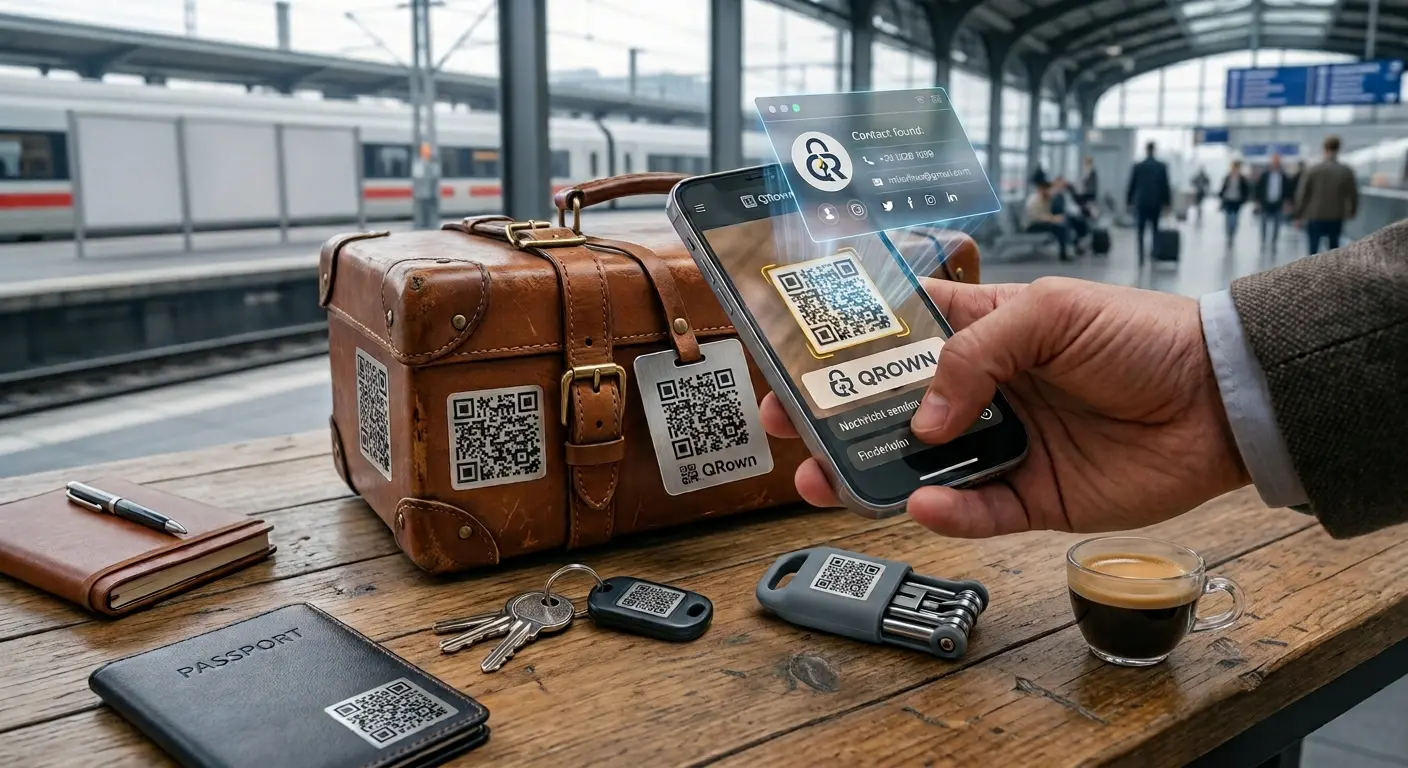
Your suitcase doesn’t show up on the baggage carousel. Your set of keys has vanished somewhere between the tram and the supermarket. You parked your bike “just for a moment” in front of the train station, and when you come back, it’s no longer on the rack—but it wasn’t stolen; someone accidentally took it because it looked exactly like their own. In most cases, nothing happens after that. The item is lying around somewhere but never finds its way back because no one knows who to return it to.
The age-old problem with the name tag
The classic solution is a tag with your name, address, and phone number—either handwritten or on a business card. It works, but it has two weaknesses. First, anyone who gets their hands on the item immediately sees your personal phone number and where you live—which is uncomfortable if it’s the wrong person. Second, the ink can fade, the paper can get wet, and the tag can tear off. Often, just when the information is needed, it’s no longer legible.
The compromise made possible by a QR code
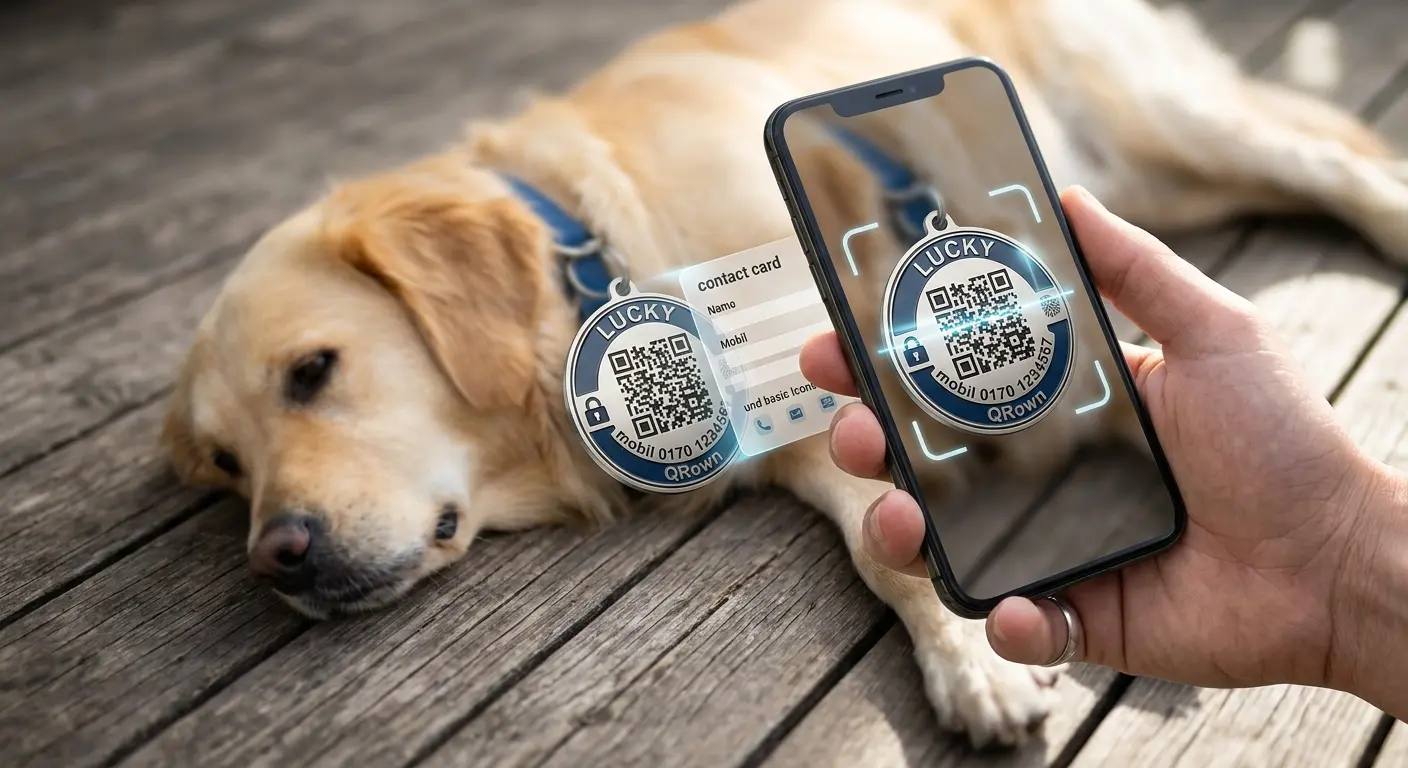
A QR code on a weather-resistant sticker solves both problems at once. It’s small enough for a luggage tag, a keychain, or a bicycle frame. Unlike a name tag, it doesn’t have to reveal your contact information. Anyone who scans the code sees only as much as you’ve specified in advance: from “all details visible immediately” to “the finder leaves a message without ever seeing your phone number or address.”
Where this pays off in everyday life
- Luggage: A misplaced or abandoned suitcase will find its way back to you directly via the code, even if the fabric tag has long since been torn off and only the sticker remains on the suitcase itself.
- Keychain: An unlabeled keychain usually ends up unopened in a drawer at the lost-and-found office. With a code, the honest finder knows immediately what to do.
- Bicycle and e-bike: Especially when there are similar models on the station plaza, a visible code helps clearly identify a bicycle as belonging to a specific person—much more discreetly than a sticker with a full address on the frame.
- Backpacks and camera equipment: Valuable gear that’s often left in different places (conferences, hiking trails, cafés) especially benefits from a discreet yet unambiguous way to return it to its owner.
The difference lies in control
The real advantage over a handwritten tag isn’t the code itself, but what’s behind it: When you create the tag, you decide whether your contact information is immediately visible or whether a message from the finder is sent to you first before any personal details are disclosed at all. A finder can even optionally share their current location without you needing their information or them needing yours. For most people, this is exactly what separates “I’m finally going to do this” from “I really should do this sometime.”
Set up in just a few minutes
Setting it up takes no longer than writing on a tag by hand—except the code stays legible even after the third downpour. The Lost & Found QR Code page from QRown shows you step by step exactly how to set up visibility, the finder’s reward, and the contact method.
Take precautions now, before something goes missing
The best time to get a “Lost & Found” QR code isn’t the day your suitcase is already missing, but the day before. Create your own Lost & Found QR code now and attach it before you need it.
Frequently Asked Questions
What exactly is a Lost & Found QR code?
It’s a small, printed code that opens a contact page when scanned—no app, no installation required. Anyone who finds a lost item simply scans it with their regular cell phone camera and immediately sees how to reach you.
Isn’t that just the same as a name tag?
At first glance, yes, but ultimately it’s much more secure and durable. A name tag automatically displays everything at once—address, phone number, often even more than necessary—and fades over time. A code can be set up so that nothing personal is visible at first, and it remains legible even after rain or several years in a backpack.
What if the person who finds the item simply ignores the code?
That risk exists with any method, including the classic name tag—a code doesn’t change that, but it makes it much easier for the honest majority to respond correctly. An optional “finder’s reward” field also provides a small incentive to actually come forward.
Do I need a separate code for each item?
Yes—each code is linked to the details of exactly one item (name, and, if applicable, a note on where it was found). That’s also why a finder knows right away which suitcase or bike is being referred to, instead of having to guess from a list of items.
How much does a Lost & Found QR code cost?
You can get started right away on the Lost & Found page and fill out the code without having to sign up first. You only need a free account to actually save it—the feature itself is included in the Free Plan.